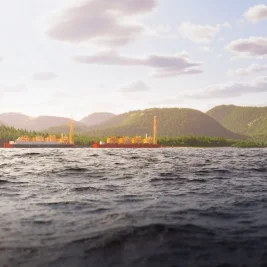
Chief Marilyn Sleet of the Heiltsuk Nation expressed relief over the preservation of the Great Bear Sea tanker restrictions to protect tribal sustenance economies.
"We have been supporting this type of measure for at least five decades, and we had members there in the late 70s talking about what the impacts would be, talking about if an oil spill happened in our territory that it would finish us," Sleet said.
Sleet emphasized the community's dependence on the coastal waters for food and cultural longevity.
"We rely upon a healthy ocean for our way of life, our sustenance, for a sustainable economy.
Some of our members harvest up to 60 per cent of their food from the ocean," Sleet added.
Chief Sleet reiterated support for the joint government stance against shipping lanes in the region.
"We are happy that both governments have once again recognized what we have always known: that the Great Bear Sea is no place for oil tankers," Sleet said.
Alexa Young, spokesperson for the Port of Vancouver, noted that the Roberts Bank Terminal 2 project will massively scale up regional container trade capacity.
"As we look to double exports, that’s going to require a lot more capacity, and thankfully we have game-changing projects on the horizon like Roberts Bank Terminal 2 that’s going to increase container trade capacity by $100 billion annually," Young told CityNews.
Lucero Gonzales of the Wilderness Committee strongly opposed the port expansion due to severe ecological impacts on southern resident killer whales.