Former Alberta deputy minister of energy Grant Sprague stated that federal frameworks currently fail to attract sufficient private capital.
"It seems like that's the way we're," Sprague said on CBC Radio's Calgary Eyeopener.
Premier Danielle Smith defended the public funding model by citing the costly historical failures of the Northern Gateway, Energy East, and Keystone XL projects.
>>> England and Norway Advance to World Cup Quarterfinals
"That’s the environment we’re finding ourselves in, and so it does take some work, I think, to make sure that the private-sector proponents understand that this is a real process," Smith said.
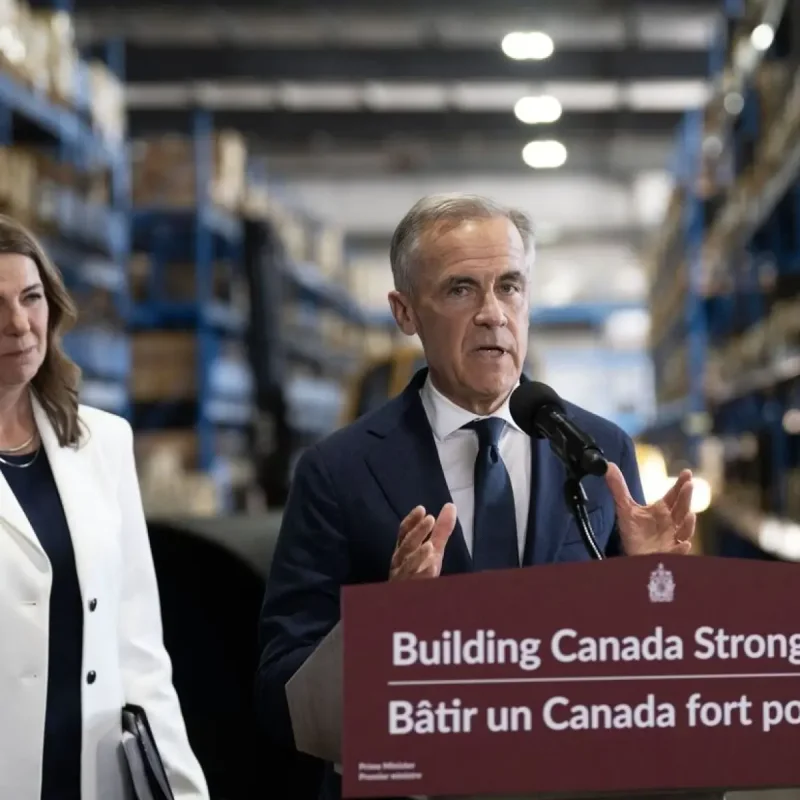
Smith emphasized the joint political willpower dedicated to finalizing the pipeline infrastructure.
"This is a real commitment on the part of all three parties – myself, as well as the Premier of British Columbia, as well as the Prime Minister – to get this project to the finish line," Smith added.
Provincial and Environmental Reactions
British Columbia Premier David Eby stated that a signed memorandum secures federal infrastructure investments and ensures the preservation of the northern tanker ban.
"This agreement doesn’t require us to support any pipeline proposal from Alberta; however, as I’ve said before, we recognize our constitutional position, and we do not have the authority to stop a new pipeline.
That’s why this agreement matters," Eby said.
Eby maintained that the deal guarantees British Columbia will receive fair compensation for environmental liabilities.
"It ensures that the tanker ban stays in place, and it ensures that if a pipeline goes ahead, that British Columbians are fairly compensated for the environmental risks we would take on any new pipeline project," Eby stated.