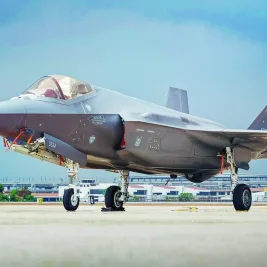
Two British F-35 fighter jets intercepted a Russian maritime patrol aircraft in the Arctic last week after the foreign plane repeatedly approached a Royal Navy carrier strike group, the UK Ministry of Defence announced.
The encounter occurred in the Norwegian Sea during Operation Firecrest, where the UK naval deployment—consisting of warships, submarines, and aircraft—was active.
Officials labeled the maneuvers by the Russian aircraft as both unsafe and unprofessional.
According to the Ministry of Defence, the Russian Bear-F plane flew at a low altitude and deployed multiple monitoring buoys directly into the water near the HMS Prince of Wales aircraft carrier before being escorted away from the area by the British jets.
"While operating in the Norwegian Sea on Operation Firecrest, the UK’s Carrier Strike Group was repeatedly approached by a Russian ‘Bear-F’ maritime patrol aircraft," said a Ministry of Defence spokesperson.
The representative explained that the foreign military aircraft conducted a close-range flyby before deploying specialized maritime detection equipment near the British flagship.
"The Bear-F passed at low altitude and unnecessarily close to HMS Prince of Wales and dropped a large number of sonobuoys in close proximity to the carrier," the Ministry of Defence spokesperson said.
The British fighter jets maintained contact with the Russian aircraft until it departed the operational airspace of the carrier strike group.
"This activity was unsafe and unprofessional.
The Russian aircraft was intercepted and escorted by two UK F-35 jets from HMS Prince of Wales until it left the area," the Ministry of Defence spokesperson said.
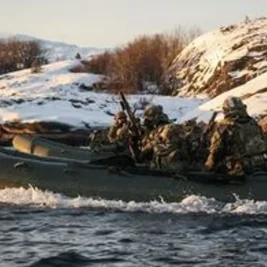
The Ministry of Defence stated that the confrontation happened as elite British troops assume command of the high readiness special operations force of the Alliance for the first time to help protect NATO allies against increasing Russian threats.