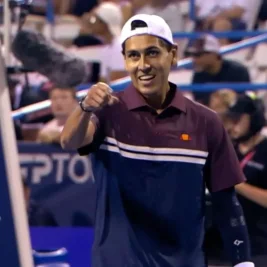
British tennis player Jack Draper is scheduled to make his competitive return on Monday at the Eastbourne International against Brandon Nakashima of the United States, following an 11-month period heavily disrupted by severe arm and knee injuries.
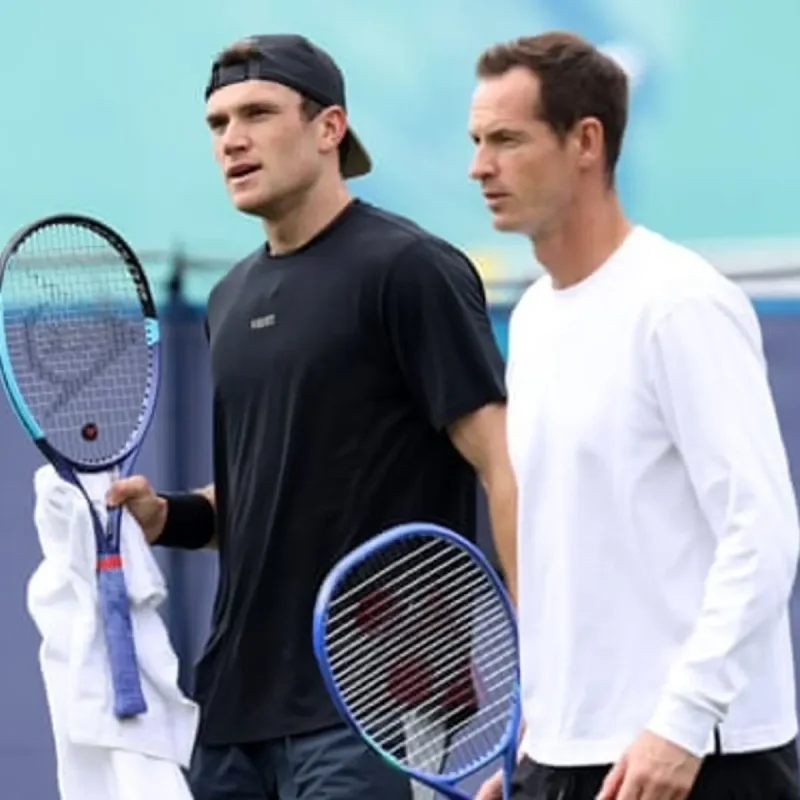
The 24-year-old lefty, whose ranking recently dropped to world No. 113, is entering his first tournament since adding his childhood idol Andy Murray to his coaching team ahead of Wimbledon.
Speaking about the new partnership, Draper highlighted the extensive expertise that the veteran Scot brings to his recovery and training sessions.
"His tennis knowledge is incredible," said Draper.
Draper explained that working with his long-time inspiration has provided a crucial boost to his mental state and confidence during a prolonged rehabilitation process.
"My tennis is actually in a really, really good spot.
[I have] lost a lot of confidence in my body over the last year that I'm rebuilding back again.
Having someone who believes in you as a person, as a player who's one of your biggest inspirations … I have a great relationship with him off the court – our relationship is very special – and that gives me a bit more energy, especially in a moment where I'm coming back and I need to have that good energy around me," said Draper.
Reflecting on the psychological difficulties of being sidelined, Draper admitted that coping with consecutive physical setbacks felt deeply isolating.
"It's been an incredibly difficult year," said Draper.
The British competitor described how his complete focus on professional advancement made the mandatory period of inactivity particularly challenging to endure.
"I'm someone who's all-in with my tennis.
I'm obsessed with improving and getting better and being the best in the world and doing all the right things.
Outside of tennis, there's not a lot going on for me. So it's obviously been very difficult, very isolated, a lot of tough days, a lot of training.
As a competitor, all you want to do is feel the buzz of being out there competing. I've had to be incredibly patient with my body," said Draper.
Draper noted the frustration of watching his official position fall after previously reaching a career-high world ranking of No. 4 last year.
"I was top 10 in the world, doing great things, and you're losing your ranking every week," said Draper.
He contrasted the individual nature of tennis with team sports, emphasizing that tracking an individual decline presents a distinct mental obstacle.
"It's not like a football team where you can have a substitute come in and take your place.
It's like you're watching your decline.
So it's tough, but I think I've learned a massive amount about my body in the last year and my recovery," said Draper.
Despite the challenges, the athlete suggested that navigating these severe physical hardships has ultimately strengthened his resolve compared to his peers.
"Before, in the position I was, I still felt like maybe there's mental levels I needed to go to to get to where I wanted to be," said Draper.
He expressed confidence that overcoming adversity provides a distinct psychological advantage as he enters future tournaments.
"And even though my ranking slipped and I haven't played, when you go through a lot of struggles and a lot of setbacks, it definitely gives you the mental fortitude to think: 'I've got something a little bit extra to these guys because of what I've gone through,'" said Draper.
When questioned during his pre-tournament press conference about whether he worried his professional career was permanently compromised, Draper dismissed the ultimate concern.
"Not at all," said Draper.
However, the left-handed player acknowledged lingering uncertainties regarding the pace of his competitive recovery.
"[I thought I might] potentially never be the same. You can always get quite obsessed with the moment in time that's going on.
But, yeah, obviously the next question mark is how quickly I'm able to get back to being at the top again," said Draper.
Draper revealed that during his last appearance 69 days ago at the Barcelona Open against Tomas-Martin Etcheverry, severe inflammation severely hindered his performance.
"I couldn't really land on my serve. It [his knee] was extremely inflamed.
I had a couple of holes in the tendon. I couldn't be the player I wanted to be out there.
I was at 30 per cent of what I can do," said Draper.
Addressing his historical tendency to play through discomfort, Draper observed that managing physical pain remains an inherent demand of elite tennis.
"These injuries are just so complicated," said Draper.
He compared his situation to other historical figures in the sport who managed long-term ailments while maintaining their athletic status.
"I know other players have had this particular one in their arm, and who knows, it might never go away.
With my knee injury as well, I probably played through it for a few months. But I think Rafa [Nadal] played with knee tendinitis for 10 years.
Tennis is obviously a tough sport.
I was top 10 in the world, doing great things, [but] it's not like a football team where you can have a substitute come in and take your place.
It's like you're kind of watching your decline. I've had a lot of injuries, but I don't believe I'm an injured athlete.
I'm a strong athlete. I have been unlucky.
That's my opinion," said Draper.
The British player noted that tactical and biomechanical refinements suggested by Murray have directly enhanced his primary service motion.
"Since Andy's come on board, he's taken a look at my tennis and definitely worked on some stuff, [including] biomechanical changes on my serve, which seems to be really helping.
I think his tennis knowledge is incredible.
But in the place I'm at right now, where I lost a lot of confidence in my body over the last year, [it is helpful] having someone who believes in you as a person, as a player, who is one of your biggest inspirations.
Our relationship, I would say, is very special.
That gives me a bit more energy, especially in a moment where I'm coming back and I need to have that good energy around me," said Draper.
Draper firmly rejected any suggestions that he was prematurely expediting his physical recovery specifically to participate in the grass-court season.
"I'm not playing because it's the grass-court season," said Draper.
He concluded by detailing his recent rehabilitation progress after a minor knee setback forced him to miss the Queen's Club Championships three weeks ago.
"I missed Queen's; that's one of my favourite tournaments. I had a setback about three weeks ago, mainly in my knee.
With knee tendinitis, you have to build your load, and you have to do loads of strength work to get the confidence where you can replicate match intensity.
I just wasn't there at that point, and so it was tough to miss Queen's, but now I'm coming back to the point where I'm gonna stay on court from now.
I don't know how these competitions are going to go in terms of my wins and the losses, which is hard to say, because obviously it's two tournaments [Eastbourne and Wimbledon] I want to do incredibly well at.
I'm very much on a build again to get myself back to where I want to be.
I feel like I'm able to be the player I want to be again on the court, which is a really great thing after a year of struggle," said Draper.
Draper summarized the extensive dedication required to withstand the mental pressure over the past calendar year.
"It's been an incredibly difficult year. I'm someone who's all-in with my tennis.
I'm obsessed with improving," said Draper.