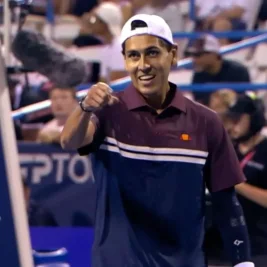

The British competitor described how his complete focus on professional advancement made the mandatory period of inactivity particularly challenging to endure.
"I'm someone who's all-in with my tennis.
I'm obsessed with improving and getting better and being the best in the world and doing all the right things.
Outside of tennis, there's not a lot going on for me. So it's obviously been very difficult, very isolated, a lot of tough days, a lot of training.
As a competitor, all you want to do is feel the buzz of being out there competing. I've had to be incredibly patient with my body," said Draper.
Draper noted the frustration of watching his official position fall after previously reaching a career-high world ranking of No. 4 last year.
"I was top 10 in the world, doing great things, and you're losing your ranking every week," said Draper.
He contrasted the individual nature of tennis with team sports, emphasizing that tracking an individual decline presents a distinct mental obstacle.
"It's not like a football team where you can have a substitute come in and take your place.
It's like you're watching your decline.
So it's tough, but I think I've learned a massive amount about my body in the last year and my recovery," said Draper.
Despite the challenges, the athlete suggested that navigating these severe physical hardships has ultimately strengthened his resolve compared to his peers.
"Before, in the position I was, I still felt like maybe there's mental levels I needed to go to to get to where I wanted to be," said Draper.