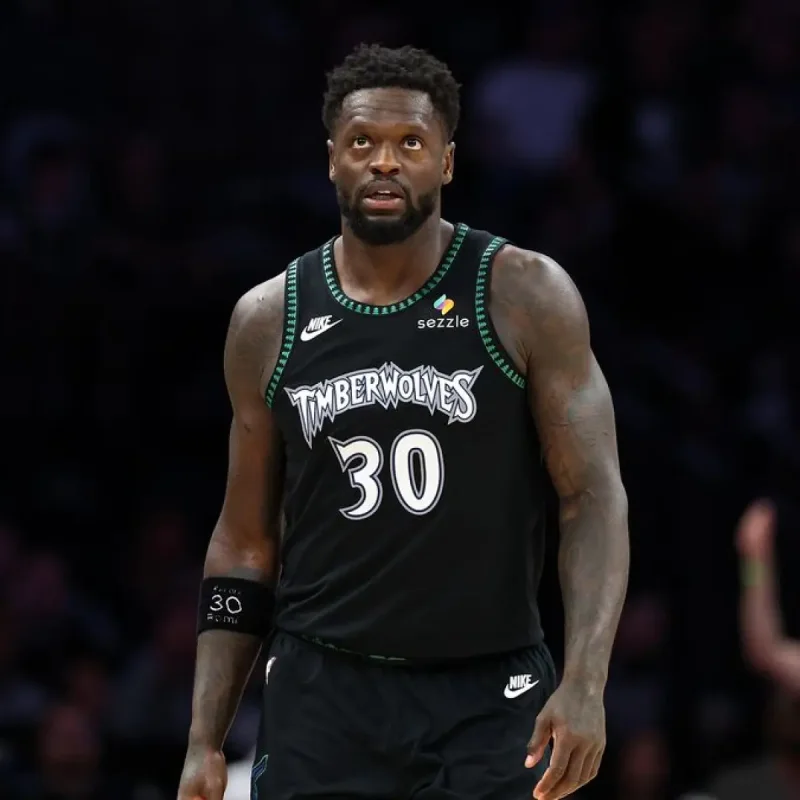
The Minnesota Timberwolves traded forward Julius Randle to the Brooklyn Nets on Monday, June 22, 2026, as part of a three-team deal that also included the Chicago Bulls, according to a report by Shams Charania of ESPN.
The multi-team transaction sent center Nic Claxton to the Chicago Bulls alongside draft capital, ending Randle's tenure in Minnesota after two seasons.
The move follows reports by Michael Scotto of HoopsHype that the Timberwolves had been actively gauging the trade market for Randle, Donte DiVincenzo, and their No. 28 overall pick ahead of the 2026 NBA draft.
Contract and Performance
Randle is entering the final guaranteed season of his contract for the 2026-27 campaign, which holds a $35.8 million player option for the 2027-28 season.
During the regular season, Randle averaged 21.1 points, 6.7 rebounds, and 5.0 assists per game, but struggled in the playoffs, averaging 12.8 points on 34.2 percent shooting during a second-round loss to the San Antonio Spurs.
Before the trade, internal discussions centered on team chemistry, roster building, and injuries, including Donte DiVincenzo's recovery from a torn right Achilles tendon.
DiVincenzo had previously expressed his connection to the Minnesota fanbase following his injury.
"Just knowing that you're being thought of, you're loved, it helps you, it gives you the motivation to want to get back," said DiVincenzo.
The guard highlighted his commitment to recovering from the serious injury, noting that he sought advice from other NBA players who suffered similar Achilles injuries.
"There's nothing more that motivates me than trying to get in front of and play in front of our fans," said DiVincenzo.
Timberwolves head coach Chris Finch previously defended his players against external criticism following their postseason elimination, addressing the media scrutiny surrounding Randle and other league stars.
"Julius was really good for us in the Denver series... Now we see Chet Holmgren is no good.
I can't stand these overreactions... I turn my TV off in the morning during the playoffs.
I don't want to hear it," said Finch.
Finch also reflected on the tactical adjustments made during the team's postseason run, specifically regarding defensive matchups against the San Antonio Spurs.
"I felt that going into Game 6, we tried to make some adjustments that were clearly not right.
I kicked myself for doing it, just because I felt we didn't probably need to be as extreme.
I flipped the matchups around.
We put Rudy Gobert on Castle, and we started with Julius Randle on Victor Wembanyama, trying to mitigate Wembanyama's hot starts.
We did a good job, but then Castle got loose on us. It wasn't a scheme that we were overly comfortable with.
We've done it from time to time, and it maybe just wouldn't have been the time to do it," said Finch.
The trade allows Minnesota to avoid future luxury tax complications while securing assets before Randle's contract expires.