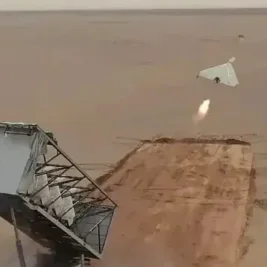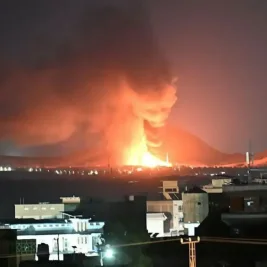
Iran launched drone and missile attacks against Bahrain and Kuwait on Sunday, June 28, 2026, following new US airstrikes in southern Iran.
The strikes severely threaten the fragile interim peace agreement between Washington and Tehran.
Escalation After Strait of Hormuz Tensions
The military escalation began after multinational maritime efforts attempted to reopen the strategically vital Strait of Hormuz without direct Iranian oversight.
Kuwaiti air defenses intercepted two ballistic missiles over a major US army base with no reported casualties.
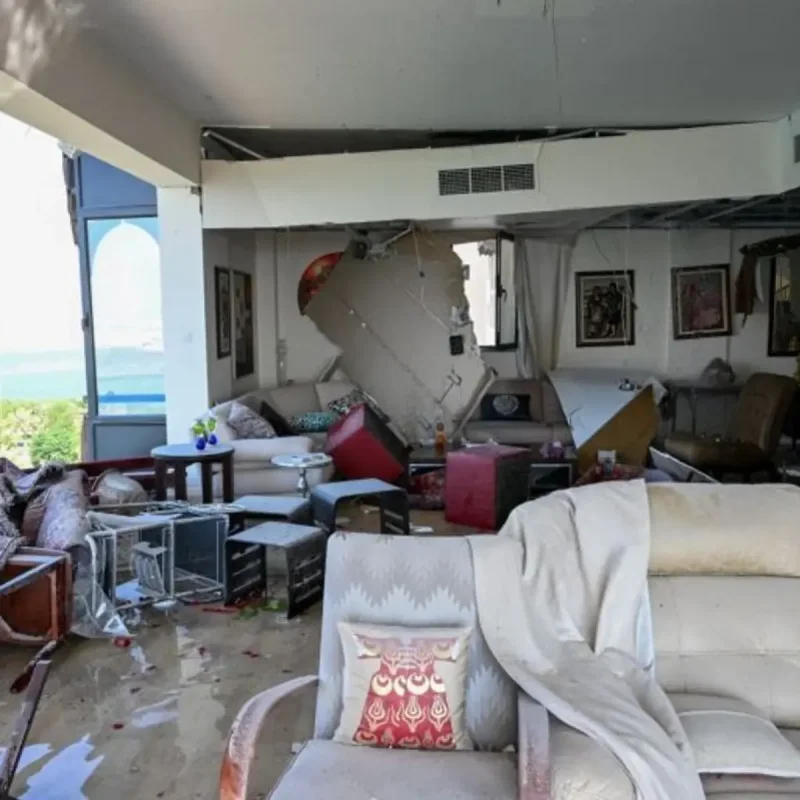
An Iranian strike in Bahrain damaged a residential building near the international airport.
US President Donald Trump issued a stern warning on social media against the Islamic Republic following the attacks.
"If that happens, the Islamic Republic of Iran will no longer exist!" said Trump.
The US military's Central Command stated that its airstrikes targeted Iranian surveillance infrastructure, communication systems, air defense sites, drone storage facilities, and minelayer capabilities.
This came after Iran allegedly attacked a Panamanian-flagged commercial tanker.
Iranian Officials Warn of Further Complications
Iranian Foreign Minister Abbas Araghchi warned against any interference.
"Any interference in this matter, any attempt to establish new or separate arrangements from those currently being carried out by the Islamic Republic of Iran, will only lead to further complications, delay the reopening of the strait of Hormuz, and increase the level of tension."
Araghchi also called for a new regional framework.
"We should reach a new framework that includes all countries in the region and without the presence or interference of any country from outside the region."
The Islamic Revolutionary Guard Corps claimed responsibility for the retaliatory strikes against US regional interests. It warned of further disruptions to ongoing diplomatic processes.
"Let the enemy know that violating the ceasefire … will lead to a complete halt of ongoing processes," said the IRGC.
Bahrain's Foreign Ministry strongly condemned the strikes, calling them a systematic pattern of repeated aggression against national sovereignty.
Supreme Leader of Iran Mojtaba Khamenei stated: "What is certain is that the criminals must be seized by the collar and made to face the punishment for their criminal acts."
Negar Mortazavi, senior fellow at the Center for International Policy, commented on Iran's leverage.
"They are using that leverage to the max and not going back to the status before the war, pretending like no war happened."
"They’re saying they want traffic to go through in coordination with them, and I think they will be able to exert that kind of power," said Mortazavi.
Pro-state political analyst Ali Samadzadeh noted potential cooperation with Russia and China.
"We could do many things with help from Russia and China to damage US strategic equipment in the region like vessels, refuelling aircraft and electronic warfare."
However, Samadzadeh added: "There was no movement in Tehran to tie Beijing and Moscow to the war, and this major flaw exists in the form of the negotiations and the text of the MoU as well."
Pro-state commentator Vahid Ashtari expressed concerns about Iran's military capabilities.
"In terms of military power, we couldn’t do anything about the US blockade and we didn’t think the crisis would get so serious."
"I think a type of blind idealism has emerged that believes we are on top and at the peak, so we shouldn’t make a deal.
But there are facts on the ground.
We have some missiles and drones to carry out an asymmetric defence, but we have no fighter jets to fly to the US and hit Trump.
Not only could we not avenge [Khamenei], we could not avenge Haj Qassem either," said Ashtari.
Meanwhile, sporadic clashes continued in southern Lebanon, where an Israeli soldier was killed in Deir Siryan village. Israeli military chief of staff Lt.
Gen.
Eyal Zamir stated: "We are prepared to rapidly resume offensive operations in both Lebanon and Iran if required."