Sixteen Cylinders Behind the Cabin
To grab headlines, Zampolli commissioned a 6.0-liter naturally aspirated V16 mounted transversely behind the cabin, paired with a five-speed manual.
The engine reportedly made 540 horsepower at 8,000 rpm, breathing through 64 valves worked by eight overhead camshafts.
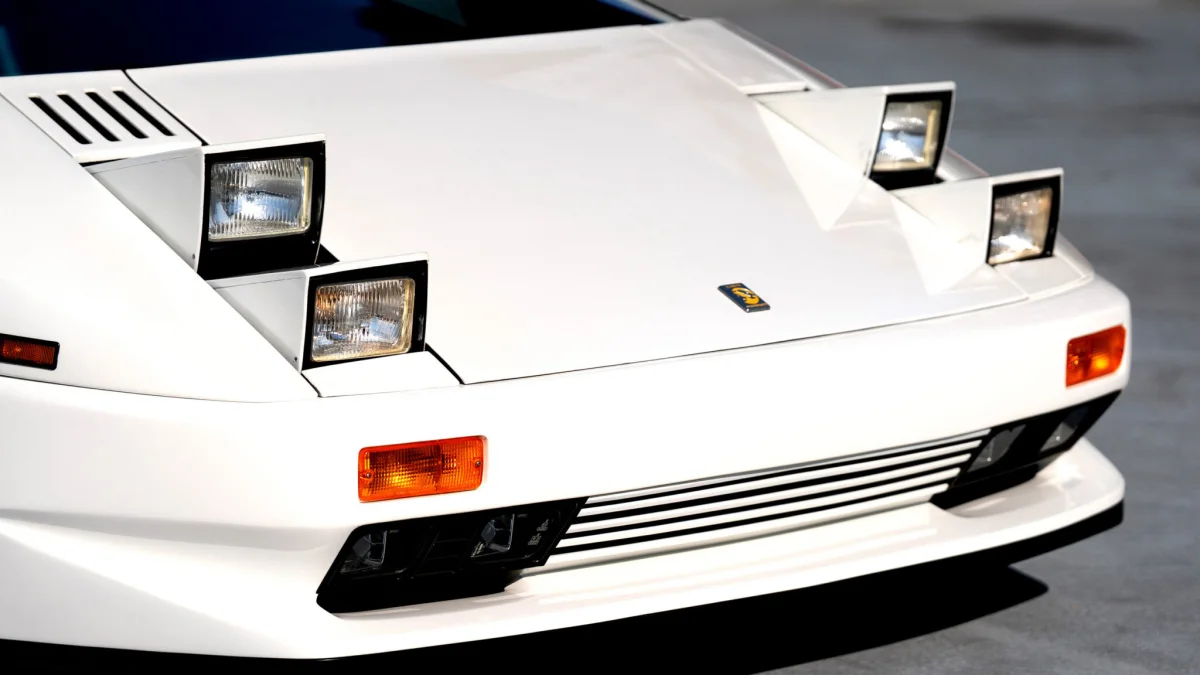
Bodywork came from Gandini, whose resume already included the Miura, Countach, and Lancia Stratos. It featured four pop-up headlights and stretched three inches wider than a Ferrari Testarossa.
An archived Car and Driver test pegged the V16T’s estimated base price at $280,000 in 1989.
Run that through inflation and you land near $772,000 in today’s money, which is genuine hypercar territory before the term existed.
For a sense of what that meant at the time, a Ford Mustang LX 5.0 started at just under $14,000 that same year, and even Ferrari’s own Testarossa opened around $150,000.
The Cizeta asked nearly double what Maranello’s flagship did, and it came from a company almost nobody had heard of.
The Diablo That Got Away
The design itself has an equally fascinating backstory.
Gandini had originally penned Lamborghini’s Countach successor, but Chrysler, which owned the Italian automaker at the time, reportedly insisted on softening the sharp-edged styling before releasing it as the Diablo.
Gandini disliked the revisions enough to walk away, later adapting many of his original ideas for the Cizeta.
Ironically, Lamborghini continued celebrating Gandini’s designs while appearing to keep their creator at arm’s length.